Full Html
Teachers’ Styles and Teaching Performance: A Case of Successful English Teachers
Full Html
1 | Introduction
The role of teachers in education is undeniably pivotal as they shape the learning experiences and outcomes of students (Shohel & Banks, 2010). In the quest for educational excellence, the focus on teacher quality has garnered significant attention (Ellett & Teddlie, 2003). The quality of teachers is influenced by numerous factors. Some scholars argue that these factors stem from internal aspects such as abilities, personality traits, and motivation (Deci & Ryan, 1987). However, others place greater emphasis on external factors such as the learning environment (Ahmed et al., 2012). Within the realm of English language teaching, the impact of teachers' styles and teaching performance becomes even more pronounced.
Teachers' styles encompass the approaches, methods, and strategies employed by teachers in their instructional practices (Ghanizadeh & Jahedizadeh, 2016). These styles are instrumental in creating an engaging and effective learning environment for students. Successful English teachers exhibit a wide range of teaching styles, tailored to the specific needs and characteristics of their students. These styles may include a combination of authoritative, facilitator, or demonstrator approaches, among others. By employing diverse teaching styles, these exceptional teachers are able to foster student engagement, motivation, and ultimately enhance learning outcomes in the English language (Dörnyei & Muir, 2019).
Teaching performance, on the other hand, encompasses various aspects such as lesson planning, classroom management, and the ability to effectively communicate and engage with students. Successful English teachers demonstrate exemplary teaching performance, which may directly influence the quality of education delivered to their students. They are assumed to possess skills and expertise to design well-structured lessons or effectively manage classroom dynamics. They may also employ pedagogical techniques that cater to the diverse learning needs of their students (Padillo et al., 2021).
The present paper delves into a case study of successful English teachers, examining the interrelationship between their teaching styles and teaching performance. Through analysing their practices, insights are gained into the factors contributing to their success in English language teaching. Moreover, this study seeks to extract valuable perceptions and the best practices that can be applied by experienced or novice teachers to enhance their own teaching effectiveness. Understanding the dynamic relationship between teachers' styles and teaching performance is of paramount importance in the pursuit of educational excellence in English language teaching. The paper aims to contribute to the body of knowledge in this field and provide practical insights for educators and policymakers to improve the quality of English language instruction.
2 | Theoretical Framework and Literature Review
Concerning quality, the present study relies heavily on the ideas presented in mega planning theory. Mega planning theory, as proposed by Kaufman (2009), provides a holistic framework that considers the broader societal impact of organizations and emphasizes the value creation for all stakeholders, including the shared society. Applying mega planning principles to the study of teachers' styles and teaching performance, particularly in the case of successful English teachers, can offer valuable contributions in several ways.
Mega planning emphasizes the societal impact of organizations and emphasizes the need to create value for the shared society. By examining successful English teachers through this lens, the study can explore how their teaching styles and performance contribute to positive outcomes beyond individual student achievement. This may include examining how successful teachers foster inclusive and culturally responsive classrooms, promote social cohesion, and support the development of critical thinking and communication skills that are essential for active citizenship in a global society (Zohoorian & Faravani, 2021).
By incorporating the principles of mega planning into the study of teachers' styles and reaching performance, researchers can gain a comprehensive understanding of the broader societal impact of successful English teachers. This approach enables the identification of effective strategies and practices that not only enhance individual teaching effectiveness but also contribute to the overall improvement of English language instruction, student learning outcomes, and the advancement of the shared society.
Kaufman (2005) suggests three helpful guides to individuals and organizations in order to become more successful. The first guide is the Organizational Elements Model (OEM). This is a tool for making decisions which consists of three elements (e.g., mega, macro, and micro) for each of which there is a level of thinking and results. Strategic planning/thinking starts with mega (societal results) in which we make decisions at the mega level for educational success, tactical planning starts with macro (organizational results), and operational planning starts with micro (individual or small group results). The second guide includes the six success factors at the mega level: past methods not working for the future, trying to differentiate between ends and means, making a link between the three levels of planning and their results, preparing all objectives, using an ideal vision, and defining the need as a gap in results. The third guide includes a problem-solving model which has six levels: assessing needs, analysing needs, selecting solutions, implementing, evaluating, and improving continuously. Kaufman maintains that for an organization to be successful, these three guides have to be considered together.
According to Grasha (1996), style refers to “a particular pattern of needs, beliefs, and behaviors that teachers display in the classroom” (p. 3). Based on the styles of teachers, there may be different roles in the classrooms. These roles are expert, formal authority, personal model, facilitator, and delegator. Grasha (2003) defines each of these roles. The expert teacher possesses knowledge and expertise that the students need. This teacher is concerned with the idea that students should receive the correct information. These teachers attempt to be well-prepared in the classroom. This can intimidate many students. The formal authority teacher possesses status among students because of knowledge and the role of a school member. He/she is concerned with providing positive and negative feedback and establishing learning goals, expectations, and rules for students. The teacher with this style emphasizes the correct, acceptable, and standard ways of doing things. He/she provides students with the structures they need to learn. The disadvantage of this style is that he/she supervises students with critical eyes toward standard practices and procedures. The teachers with personal model style act in a way to establish a model for the student's thinking and behavior. They encourage students to observe and use what seems effective from a teacher's point of view. The facilitator teacher is characterized by a focus on the personal nature of the student-teacher interaction. The teacher guides and directs students by asking questions, exploring options, suggesting alternatives, and encouraging them to develop criteria to make informed choices. Such a teacher's final goal is to develop students’ feeling of being more independent and responsible. This teaching style is often time-consuming and can make students uncomfortable. Finally, the teacher with a delegator style is concerned with the students’ autonomy. She/he is a teacher who expects learners to work independently and helps them just when it is needed. These teaching styles or personal qualities influence teachers' performance; consequently, we have teacher-centred styles (e.g., expert, formal authority, and personal model) or student-centred styles (e.g., facilitator and delegator) in classrooms (Wai, 2018).
As far as teaching performance is concerned, according to Moreno-Murcia et al. (2015), there are three effective factors: planning, development, and result. In addition to that, based on this approach, Zhi and Wang (2023) argue that a teacher must have the ability of knowing how to plan and manage his/her teaching activities based on the teaching methods, learning activities and also has the ability to develop them during his/her teaching performance. They believe that a qualified teacher based on these three factors of teaching performance (e.g., planning, development, and result) must consider the features of teaching activities:
- Adequacy: The teaching activity must respond to the requisites established by the university and the centre with regard to the organization, planning, and development of the teaching and the evaluation of student learning. Such requisites must be aligned with the teaching objectives and guidelines included in the curriculum and with the institution's objectives;
- Satisfaction: The teaching activity must generate a favourable opinion from the rest of the agents implied, especially students, colleagues, and academic heads;
- Efficiency: Considering the resources at the teacher’s disposition, teaching activity must foster the attainment of the anticipated results, in terms of the objectives and guidelines outlined in the curriculum;
- Predisposition to innovation in teaching: Teaching activity must include a point of view that favours the training of the teaching staff through self?training or training regulated by other authorities. It should be developed from a predisposition to introduce changes that improve the teaching?learning process and, therefore, influence the manner in which teaching is planned and developed, or results are evaluated.
Devine et al. (2013) claim that “education systems internationally are undergoing profound change”. As a result, “there has been increasing attention on teacher quality and effectiveness internationally” (p. 83). While quality is a concern of the present study, teachers’ success as a determinant of quality is deemed vital. As stated by Pishghadam and Moafian (2009), teacher success includes the constructs of teaching accountability, interpersonal relationship, attention to all, examination, commitment, learning boosters, creating a sense of competence, teaching boosters, physical and emotional acceptance, empathy, class attendance, and dynamism.
The current challenge for teacher training is to guarantee qualification through which quality teaching will develop; thus, the experiences of successful teachers can provide a clear picture of success in teaching as well as identifying the vital factors in teaching performance. Also, it can provide a basis by reliance on which the quality of the current and future teachers could be improved. Accordingly, the present study sought to answer the following questions:
1. What are the patterns of teachers' styles among successful Iranian English teachers?
2. What are the patterns of teaching performance among successful Iranian English teachers?
3. What are the other factors affecting a teacher's success based on successful Iranian English teachers' views?
3 | Method
This study was a descriptive cross-sectional survey and its design was based on a sequential exploratory design. As noted by Creswell et al. (2003), “Exploratory Design which is related to educational research consists of a two-phase mixed methods design in which the quantitative and qualitative methods are implemented in a sequence” (p. 375).
3.1 | Participants and Setting
To conduct the present study, the researcher selected a total of 90 teachers majoring in Teaching English as a Foreign Language (TEFL) at school, university, and institutional level with educational degrees of PhD and MA. The age range of the teacher participants was 27 to 50 with a mean of 35 and a standard deviation of 2.6.
Considering the factor that the focus of this study is on successful English teachers with specific features, the researcher employed the successful teachers' questionnaire for distinguishing successful teachers and accordingly selected a purposive sampling procedure (Sekaran & Bougie, 2010). Furthermore, in the first stage successful teachers were selected through consulting with the institutes or schools' managers and then based on the results of the successful teachers' questionnaire it was confirmed. The researcher also employed the successful teachers' questionnaire, developed by Pishghadam and Moafian (2009), to distinguish successful teachers. For that purpose, those teachers who received an average score above 3 on the questionnaire items for all constructs could be considered as the study sample.
To seek the teachers' styles and performance at the second stage, the students who attended the successful teachers’ classes, found in the first stage, were selected randomly. The data were collected from 700 students studying in different districts in Mashhad. Also, for the qualitative phase of the study eight successful English teachers, selected randomly, participated in the semi-structured interviews. Table 1 demonstrates the teachers’ characteristics who were interviewed.
Table1
Characteristics of the Teachers
Teachers | Gender | Age | Years of Teaching Experience | Degree |
Teacher 1 | Female | 36 | 12 | PhD |
Teacher 2 | Male | 50 | 25 | PhD |
Teacher 3 | Male | 34 | 15 | MA |
Teacher 4 | Male | 36 | 8 | MA |
Teacher 5 | Male | 28 | 10 | MA |
Teacher 6 | Male | 29 | 10 | MA |
Teacher 7 | Female | 27 | 4 | MA |
Teacher 8 | Female | 30 | 7 | MA |
3.2 | Instruments
To collect data, the first instrument administered was the Grasha's (2002) teaching style inventory which contains 40 items with five styles of expert, formal authority, personal model, facilitator, and delegator. Each style has eight items. An acceptable reliability index of 0.72 was reported by Grasha. For the present study, the reliability was 0.70.
The second instrument was the translated version of Moreno-Murcia et al.’s (2015) Teaching Performance Questionnaire. The questionnaire includes 28 items which were grouped into three factors of planning, development, and result to measure the quality of the teachers' performance. The translated version of the questionnaire was developed by Feizi et al. (2017). The obtained Cronbach's alpha coefficient was 0.92 for the present study.
The third questionnaire used in this study was Pishghadam and Moafian’s (2009) Successful Teacher Questionnaire which includes 47 items based on which the students evaluated their teachers. The constructs include teaching accountability (7 items), interpersonal relationship (5 items), affection to all (5 items), examination (3 items), commitment (3 items), learning boosters (6 items), creating a sense of competence (4 items), teaching boosters (4 items), physical and emotional acceptance (2 items), empathy (2 items), class attendance (2 items), dynamism (2 items). In this study, the Persian version of the questionnaire was used, and the reliability of the scale was 0.94.
Furthermore, a semi-structured interview was conducted as a qualitative technique to provide a deeper understanding of the teachers' attitudes toward being a successful teacher. The participants included three females and five males. The interviews were recorded and then transcribed by the researcher in order to be analysed. The following were the teachers' Interview Questions:
What qualities do you have which would make you an effective teacher?
How will you develop yourself as a successful teacher?
What are the other factors that influence a teacher’s success?
4 | Results
The first research question (e.g., What are the patterns of teachers' style among the successful Iranian English teachers?) was addressed by examining the descriptive statistics of sub-constructs of teaching styles. Table 2 displays these statistics, including the mean, standard deviation, maximum, and minimum scores. The subscales of teaching styles, consisting of 8 items, had a possible score ranging from 8 to 40.
Table 2
Descriptive Statistics of Sub-Constructs of Teaching Styles
N | Minimum | Maximum | Mean | SD | |
Expert | 53 | 27.00 | 39.00 | 32.69 | 2.83 |
Authority | 53 | 29.00 | 39.00 | 34.62 | 2.43 |
Model | 53 | 30.00 | 40.00 | 36.15 | 2.39 |
Facilitator | 53 | 29.00 | 40.00 | 35.09 | 2.68 |
Delegator | 53 | 23.00 | 39.00 | 32.45 | 3.21 |
Style | 53 | 154.00 | 195.00 | 171.01 | 9.55 |
Note. SD = Standard Deviation
The results of the survey seeking the patterns of teachers' style among the successful Iranian English teachers are presented in this section. To answer the first research question, the frequency and percentage were utilized for each of the five sub-constructs of the teaching style questionnaire. As can be seen in Table 3, the majority of the teachers strongly agreed or agreed with the Model style. Among the eight items, Item 13 (I typically show students how and what to do in order to master course contents) had the highest percent of strongly agree (77.4%), and Item 33 (Eventually, many students begin to think like me about course content) had the lowest percent of strongly agree (28.3%). Item 33 (eventually, many students begin to think like me about course content) had the highest percent of agree (50.9%). Table 4 shows the frequencies and percentages of the items on the facilitator factor.
Table 3
Frequencies and Percentages of the Item on the Model Factor
Items | SA | A | N | D | SD |
F % | F % | F % | F % | F % | |
Q3 | 33 62.3 | 19 35.8 | 1 1.9 | 0 0 | 0 0 |
Q8 | 39 73.6 | 13 24.5 | 1 1.9 | 0 0 | 0 0 |
Q13 | 41 77.4 | 11 20.8 | 1 1.9 | 0 0 | 0 0 |
Q18 | 38 71.7 | 14 26.4 | 1 1.9 | 0 0 | 0 0 |
Q23 | 36 67.9 | 14 26.4 | 3 5.7 | 0 0 | 0 0 |
Q28 | 36 67.9 | 16 30.2 | 1 1.9 | 0 0 | 0 0 |
Q33 | 15 28.3 | 27 50.9 | 5 9.4 | 5 9.4 | 1 1.9 |
Q38 | 21 39.6 | 20 37.7 | 11 20.8 | 1 1.9 | 0 0 |
Table 4
Frequencies and Percentages of the Items on the Facilitator Factor
Items | SA | A | N | D | SD |
F % | F % | F % | F % | F % | |
Q4 | 34 64.2 | 14 26.4 | 2 3.8 | 1 1.9 | 2 3.8 |
Q9 | 24 45.3 | 23 43.4 | 5 9.4 | 1 1.9 | 0 0 |
Q14 | 31 58.5 | 21 39.6 | 1 1.9 | 0 0 | 0 0 |
Q19 | 26 49.1 | 25 47.2 | 2 3.8 | 0 0 | 0 0 |
Q24 | 37 69.8 | 12 22.6 | 4 7.5 | 0 0 | 0 0 |
Q29 | 35 66 | 14 26.4 | 4 7.5 | 0 0 | 0 0 |
Q34 | 10 18.9 | 26 49.1 | 4 7.5 | 8 15.1 | 5 9.4 |
Q39 | 34 64.2 | 16 30.2 | 3 5.7 | 0 0 | 0 0 |
The majority of the teachers strongly agreed or agreed with the facilitator style. Among the eight items, Item 24 (course activities encourage students to take initiative and responsibility for their learning) had the highest percent of strongly agree (69.8%), and Item 34 (students can make choices among activities in order to complete course requirements) had the lowest percent of strongly agree (18.9%). Item 34 (students can make choices among activities in order to complete course requirements) had the highest percent of agree (49.1%). Table 5 shows the frequencies and percentages of the items on the authority factor.
The majority of the teachers strongly agreed or agreed with the authority style. Among the eight items, Item 27 (the course has very specific goals and objectives that I want to accomplish) had the highest percent of strongly agree (79.2%), and Item 7 (I give students negative feedback when their performance is unsatisfactory) had the lowest percent of strongly agree (20.8%). Item 2 (I set high standards for students in this class) had the highest percent of agree (62.3%), and Item 7 (I give students negative feedback when their performance is unsatisfactory) had the highest percent of strongly disagree (20. 8%). Table 6 shows frequencies and percentages of the items on the expert factor.
Table 5
Frequencies and Percentages of the Items on the Authority Factor
Items | SA | A | N | D | SD |
F % | F % | F % | F % | F % | |
Q2 | 14 26.4 | 33 62.3 | 2 3.8 | 3 5.7 | 1 1.9 |
Q7 | 9 20.8 | 21 39.6 | 2 3.8 | 10 18.9 | 11 20.8 |
Q12 | 26 49.1 | 20 37.7 | 6 11.3 | 1 1.9 | 0 0 |
Q17 | 33 62.3 | 17 32.1 | 1 1.9 | 2 3.8 | 0 0 |
Q22 | 41 77.4 | 10 18.9 | 2 3.8 | 0 0 | 0 0 |
Q27 | 42 79.2 | 10 18.9 | 1 1.9 | 0 0 | 0 0 |
Q32 | 29 54.7 | 22 41.5 | 2 3.8 | 0 0 | 0 0 |
Q37 | 29 54.7 | 24 45.3 | 0 0 | 0 0 | 0 0 |
Table 6
Frequencies and Percentages of the Items on the Expert Factor
Items | SA | A | N | D | SD |
F % | F % | F % | F % | F % | |
Q1 | 26 49.3 | 19 35.8 | 5 9.4 | 1 1.9 | 2 3.8 |
Q6 | 40 75.5 | 11 20.8 | 1 1.9 | 0 0 | 1 1.9 |
Q11 | 16 30.2 | 26 49.1 | 8 15.1 | 2 3.8 | 1 1.9 |
Q16 | 38 71.7 | 15 28.3 | 0 0 | 0 0 | 0 0 |
Q21 | 13 24.5 | 20 37.7 | 9 17.0 | 6 11.3 | 5 9.4 |
Q26 | 25 47.2 | 17 32.1 | 11 20.8 | 0 0 | 0 0 |
Q31 | 7 13.2 | 17 32.1 | 21 39.6 | 5 9.4 | 3 5.7 |
Q36 | 20 37.7 | 16 30.2 | 6 11.3 | 9 17.0 | 2 3.8 |
The majority of the teachers strongly agreed or agreed with the expert factor. Among the eight items, Item 6 (sharing my knowledge and expertise with students is very important to me) had the highest percent of strongly agree (75.5%), and Item 31 (students might describe me as a ‘storehouse of knowledge’ who dispenses the fact, principles, and concepts they need) had the lowest percent of strongly agree (13.2%). Item 11 (what I have to say about a topic is important for students to acquire a broader perspective on the issues in that area) had the highest percent of agree (49.11%), and Item 36 (there is more material in this course than I have time available to cover it) had the highest percent of disagree (17%). Table 7 shows frequencies and percentages of the items on the delegator factor.
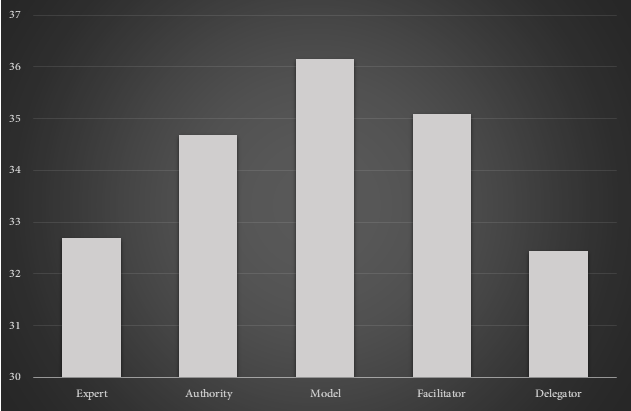
The majority of the teachers strongly agreed or agreed with the delegator style. Among the eight items, Item 40 (I assume the role of a resource person who is available to students whenever they need help) had the highest percent of strongly agree (62.3%), and Item 5 (students typically work on course projects alone with little supervision from me) had the lowest percent of strongly agree (9.4%). Items 20 (developing the ability of students to think and work independently is an important goal) and 25 (students take responsibility for teaching part of the class sessions) had the highest percent of agree (54.7%). However, Item 5 (students typically work on course projects alone with little supervision from me) had the highest level of disagree (32.1%). Accordingly, the mean scores of the different sub-constructs of teachers’ style among successful teachers are presented in Figure 1. As the figure demonstrates, among the five sub-constructs of teachers’ style, model and facilitator styles had the highest mean scores and expert and delegator had the lowest mean scores among successful teachers.
Table 7
Frequencies and Percentages of the Items in the Delegator Factor
Items | SA | A | N | D | SD |
F % | F % | F % | F % | F % | |
Q5 | 5 9.4 | 16 30.2 | 5 9.4 | 17 32.1 | 10 19.9 |
Q10 | 44 83 | 7 13.2 | 1 1.9 | 1 1.9 | 0 0 |
Q15 | 22 41.5 | 23 43.4 | 5 9.4 | 2 3.8 | 1 1.9 |
Q20 | 21 39.6 | 29 54.7 | 1 1.9 | 2 3.8 | 0 0 |
Q25 | 13 24.5 | 29 54.7 | 6 11.3 | 4 7.5 | 1 1.9 |
Q30 | 14 26.4 | 24 45.3 | 6 11.3 | 8 15.1 | 1 1.9 |
Q35 | 22 41.5 | 24 45.3 | 2 3.8 | 4 7.5 | 1 1.9 |
Q40 | 33 62.3 | 16 30.2 | 3 5.7 | 1 1.9 | 0 0 |
Figure 1
Mean Score of Different Sub-Constructs of Teachers’ Styles
To answer the second research question (What are the patterns of teaching performance among the Iranian successful English teachers?), Table 8 presents descriptive statistics of sub-constructs of teacher performance (planning, development, and Result). Because the number of items was different in the various subscales of the questionnaire, an average item score was computed for each sub-construct, ranging from 1 to 5. As Table 8 shows, the number of student participants was 488. Among three subscales of teacher performance, planning has the highest mean (4.01), and development has the lowest mean (3.92). The results of the survey seeking the patterns of teaching performance among the successful Iranian English teachers are presented in this section. Table 9 shows the frequencies and percentages of the items on the planning construct.
Table 8
Descriptive Statistics of Teacher Performance
N | Minimum | Maximum | Mean | SD | |
Planning | 488 | 1.00 | 5.00 | 4.01 | 0.89 |
Development | 488 | 1.00 | 5.00 | 3.92 | 0.85 |
Result | 488 | 1.00 | 5.00 | 3.97 | 0.87 |
Performance | 488 | 1.00 | 5.00 | 3.95 | 0.83 |
Table 9
Frequencies and Percentages of the Items on the Planning Teaching Performance
Items | SA | A | N | D | SD |
F % | F % | F % | F % | F % | |
Q6 | 202 41.4 | 157 32.2 | 81 16.6 | 28 5.7 | 20 4.1 |
Q8 | 210 43.0 | 161 33.0 | 63 12.9 | 31 6.4 | 23 4.7 |
Q10 | 189 38.7 | 154 31.6 | 78 16.0 | 39 8.0 | 28 5.7 |
Q18 | 216 44.3 | 149 30.5 | 68 1 .9 | 40 8.2 | 15 3.1 |
Q22 | 241 49.4 | 130 26.6 | 72 14.8 | 21 4.3 | 24 4.9 |
The majority of the students strongly agreed or agreed with the Planning construct of the teaching performance. Among the five items, Item 22 (he/she has a good command of the contents of the course) had the highest percent of strongly agree (49.4%), and Item 8 (he/she allows and encourages students' participation) had the highest percent of agree (33%). Item 18 (he/she maintains an objective and respectful position with the students) had the lowest percent of strongly disagree (3.1%). Table 10 demonstrates the frequencies and percentages of the items on the development subscale of teaching performance.
The majority of the students strongly agreed or agreed with the Development construct of teaching performance. Among the fourteen items, Item 1 (presents the minimum content of his/her subject matter, tailored to the students' knowledge) had the highest percent of strongly agree (48.4%), and Item 12 (he/she provides initial and final overviews of the session and/or subject in class) had the highest percent of agree (37.9%). Item 15 (he/she facilitates students-students and student-professor interaction) had the lowest percent of strongly disagree (3.1%). Table 11 shows the frequencies and percentages of the items on the result construct of the teaching performance.
The majority of the students strongly agreed or agreed with Result construct of the teaching performance. Among the four items, Item 16 (he/she attends and responds clearly to questions asked in class) had the highest percent of strongly agree (44.3%), and Item 4 (he/she provides clear information about objectives, bibliography, tutorials, contents, and assessment methods in the subject's curriculum) had the highest percent of agree (34.4%). Item 7 (he/she presents the contents following a clear and logical framework, highlighting the important aspects) had the lowest percent of strongly disagree (3.5%). Accordingly, the mean score of different sub-constructs of teachers’ performance among successful teachers are illustrated in Figure 2. As the figure demonstrates, among the three sub-constructs of teachers’ performance, planning had the highest mean score, and development had the lowest mean score among successful teachers.
Table 10
Frequencies and Percentages of the Items on the Development Factor
Items | SA | A | N | D | SD |
F % | F % | F % | F % | F % | |
Q1 | 236 48.4 | 151 30.9 | 65 13.3 | 11 2.3 | 25 5.1 |
Q2 | 146 29.9 | 170 34.8 | 94 19.3 | 40 8.2 | 38 7.8 |
Q3 | 168 34.4 | 152 31.1 | 110 225 | 33 6.8 | 25 5.1 |
Q5 | 192 39.3 | 141 28.9 | 104 21.3 | 30 6.1 | 21 4.3 |
Q11 | 170 34.8 | 158 32.4 | 97 19.9 | 40 8.2 | 23 4.7 |
Q12 | 173 35.5 | 185 37.9 | 71 14.5 | 37 4.6 | 22 4.5 |
Q13 | 206 42.2 | 142 29.1 | 84 17.2 | 31 6.4 | 25 5.1 |
Q14 | 193 39.5 | 145 29.7 | 94 19.3 | 27 5.5 | 29 5.9 |
Q15 | 199 40.8 | 142 29.1 | 99 20.3 | 33 6.8 | 15 3.1 |
Q17 | 217 44.5 | 156 32 | 54 11.1 | 40 8.2 | 21 4.3 |
Q19 | 197 40.4 | 157 32.2 | 77 15.8 | 32 6.6 | 25 5.1 |
Q20 | 190 38.9 | 138 28.3 | 91 18.6 | 33 6.8 | 36 7.4 |
Q21 | 189 38.7 | 135 27.7 | 78 16 | 49 10 | 37 7.6 |
Q23 | 230 47.1 | 136 27.9 | 66 13.5 | 27 5.5 | 29 5.9 |
Table 11
Frequencies and Percentages of the Items on the Result Factor
Items | SA | A | N | D | SD |
F % | F % | F % | F % | F % | |
Q4 | 192 39.3 | 168 34.4 | 74 15.2 | 36 7.4 | 18 3.7 |
Q7 | 197 40.4 | 161 33 | 80 16.4 | 33 6.8 | 17 33.5 |
Q9 | 189 38.7 | 146 29.9 | 88 18 | 35 7.2 | 30 9.1 |
Q16 | 216 44.3 | 149 30.5 | 71 14.5 | 29 5.9 | 23 4.7 |
The qualitative data related to the interview questions were also analysed. The analyses were carried out to find the recurrent emergent themes. Accordingly, Table 12 shows the frequencies of the participants’ answers to the first interview question. Based on the data which were gathered through the interview, the results show that among the 8 successful teachers, 7 individuals considered students' needs and interests. Furthermore, 7 of them were pre-planned, and 6 of them tried to be creative in order to teach effectively. Table 13 shows the frequencies of the participants’ answers to the second interview question.
The most frequent themes suggested by the participants presented in Table 13 indicate that 7 teachers out of 8 were kind and helpful to their students. In addition to that, all the 8 teachers tried to keep themselves up-to-date in different ways, such as studying new books, searching and reading articles, etc. Table 14 shows the frequencies of the participants’ answers to the third interview question.
The results indicate that there were other factors which influence a teachers’ success. As it can be seen, the majority of the successful English teachers used other successful teachers' experiences in their teaching. Moreover, 7 of them were open-minded teachers who were flexible.
Table 12
Frequencies of the First Interview Question
Responses Frequency | |
Paying attention to my students' degree of knowledge, interests, needs | 7 |
Preplanning | 7 |
Being very patient and hardworking | 4 |
Creating a good learning environment | 5 |
Trying to be creative in my teaching. | 6 |
Figure 2
Mean Score of Different Sub-Constructs of Teachers’ Performance
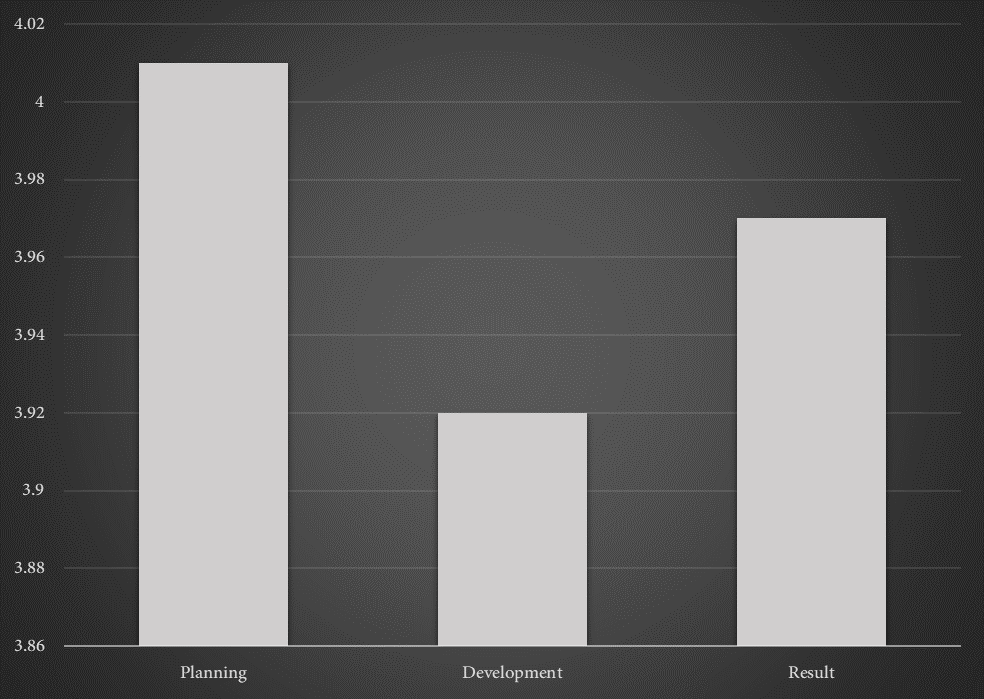
Table 13
Frequencies of the Second Interview Question
Trying to search on better way of teaching | 3 |
Considering the objectives of the course | 5 |
Being kind and helpful to my students | 7 |
Keeping up-to-date (studying new books, searching and reading new articles, taking part in conferences, and seminars) | 8 |
Table 14
Frequencies of the Third Interview Question
Responses Frequency | |
Trying to be in touch with other successful teachers. | 8 |
Seeing myself in place of learning rather than teaching. | 5 |
Being open-minded and ready for any changes. | 7 |
5 | Discussion
The results of the present study revealed that the primary teaching styles among Iranian teachers were model and facilitator, with mean scores of 36.15 and 35.09, respectively. This finding addresses the first research question. The secondary teaching styles, in descending order, were formal authority, expert, and delegator, with mean scores of 34.62, 32.68, and 32.45, respectively.
The findings suggest that successful teachers in this study employed a combination of student-centered and teacher-centered approaches. According to Grasha (2002), a teacher with a facilitator style adopts a learner-centered approach, providing feedback, actively listening, and facilitating discussions. On the other hand, a teacher with a model style takes a teacher-centered approach, acting as a coach, teaching by example, and serving as a worthy role model. These teachers also provide feedback that helps enhance students' skills. Similarly, Díaz Larenas et al. (2011) describes the model style as teacher-centered, emphasizing the teacher's skillfulness and ability to connect with students. This can happen through real-life examples, fostering their efforts (Mazloom & Hussain, 2020). Additionally, Sen (2018) defines a facilitator teacher as someone with critical thinking skills, which are considered crucial for success in today's educational objectives. The integration of these teaching styles suggests that successful teachers prioritize both student engagement and teacher expertise to create effective learning environments.
Turning to the analysis of the performance questionnaire, for the planning construct, it was found that 49.4% of students strongly agreed with the statement that their teachers had a good command of the course content (Item 22), while 33% agreed that their teachers allowed and encouraged student participation (Item 8). The item with the lowest percentage of strongly disagree responses (3.1%) was Item 18, indicating that teachers maintained an objective and respectful position with students.
With regard to the development construct, 48.4% of students strongly agreed that teachers presented the minimum content tailored to students' knowledge (Item 1), and 37.9% agreed that teachers provided initial and final overviews of the session or subject (Item 12). The item with the lowest percentage of strongly disagree responses (3.1%) was Item 15, which pertained to teachers facilitating student-student and student-professor interaction.
Regarding the result construct, 44.3% of students strongly agreed that teachers attended to and responded clearly to questions asked in class (Item 16), indicating their perception of teachers as punctual and knowledgeable providers of information.
6 | Conclusion
The study highlights the significance of teachers' styles and personal qualities in the classroom, extending beyond their individual components. When these styles blend together, they serve important functions, such as the expert/formal authority blend conveying a sense of control and neutrality in the classroom. Personal qualities, such as a sense of humor, are linked to professional qualities like classroom management and subject matter knowledge, as they engage students and create a positive learning environment (Lovorn & Holaway, 2015). Successful teachers possess the ability to assess their own teaching experience, analyze their strengths and weaknesses, and continuously learn and adapt to new challenges (Guerriero, 2014).
The findings also reveal that successful English teachers with model and facilitator styles possess the ability to cater to students' needs and interests, emphasizing the importance of preplanning and experience. Experienced teachers differentiate themselves through their reflective thinking and the ability to learn from their experiences (Machost & Stains, 2023). They remain fresh and adaptable by continuously trying new approaches and staying updated. Other factors contributing to teachers' success include having role models, maintaining a commitment to lifelong learning, being flexible, and embracing change (Ordu, 2021).
Institutional leaders can utilize the study's findings to enhance teaching quality within their institutions by establishing a reference framework. This framework can prioritize aspects such as presenting content tailored to students' knowledge and providing initial and final overviews of sessions or subjects. Teacher training courses can focus on these areas to improve teaching quality and ultimately enhance student learning outcomes.
Policymakers in language teaching can consider implementing a teaching qualification framework that regularly monitors teachers' characteristics. This framework can concentrate on core teaching activities such as planning and classroom preparation, ensuring teachers are equipped with the necessary skills and knowledge (Saavedra & Opfer, 2012).
The findings also have implications for teacher training services. They can design programs that address the theoretical aspects identified in the study, encouraging teachers to explore better teaching methods, consider course objectives, and maintain kindness and helpfulness towards students. These programs can also provide opportunities for teachers to identify and improve their weaknesses through workshops, courses, conferences, and seminars. Overall, the study's findings serve as motivation for teachers to actively engage in professional development programs.
References
teachers at higher education level in Khyber pakhtunkhwa. Academic Research International, 2(2), 336−341.
URL:http://www.savap.org.pk/journals/ARInt./Vol.2(2)/2012(2.2-37).pdf
In A. Tashakkori & C. Teddlie (Eds), Handbook on mixed methods in the behavioral and social sciences (pp.
209−240). Sage.
Psychology, 53(6), 1024–1037. https://doi.org/10.1037/0022-3514.53.6.1024
teaching’. Irish Educational Studies, 32 (1), 83−108. https://doi.org/10.1080/03323315.2013.773228
types of efl instructors in the public and private sectors. Profile: Issues in Teachers' Professional Development, 13(1),
111−127. URL:https://eric.ed.gov/?id=EJ1051521
Dörnyei, Z., & Muir, C. (2019). Creating a motivating classroom environment. In X. Gao (Ed.), second handbook of
English language reaching. Springer international handbooks of education. Springer.
https://doi.org/10.1007/978-0-387-46301-8_47
Kong. Teaching and Teacher Education, 24(3), 623−634. https://doi.org/10.1016/j.tate.2007.09.007
the USA. Journal of Personnel Evaluation in Education, 17(1), 101−128. https://doi.org/10.1023/A:1025083214622
evaluation questionnaire in Urmia University of Medical Sciences, Urmia, Iran, 2015. Strides in Development of
Medical Education, 14(2), 1−7. https://sdme.kmu.ac.ir/article_90589.html
Cogent Education, 3(1), 1−17. https://doi.org/10.1080/2331186X.2016.1151997
Glazzard, J., & Stokoe, J. (2011). Achieving outstanding on your teaching placement: Early years and primary school-
based training. Sage.
College Teaching, 42(4), 142−149. https://doi.org/10.1080/87567555.1994.9926845
Teaching Excellence, 7(5), 1995−1996. URL:https://podnetwork.org/content/uploads/V7-N5-Grasha.pdf
Grasha, A. F. (2002). Teaching with style: A practical guide to enhancing learning by understanding teaching and
learning styles. Alliance Publishers.
Grasha, A. F. (2003). The dynamics of one-on-one teaching. The Social Studies, 94(4), 179−187.
https://www.jstor.org/stable/27559110
objectives. OECD. Retrieved from
https://www.oecd.org/education/ceri/Background_document_to_Symposium_ITEL-FINAL.pdf
Kaufman, R. (2005). Defining and delivering measurable value: A mega thinking and planning primer. Performance
Improvement Quarterly, 18(3), 6−16. https://doi.org/10.1111/j.1937-8327.2005.tb00337.x
organizational success. Performance Improvement Quarterly, 22(2), 5−15.
https://doi.org/10.1002/piq.20052
tool. The European Journal of Humour Research, 3(4), 24−35. https://doi.org/10.7592/EJHR2015.3.4.lovorn
Education, 22(2), es2. https://doi.org/10.1187/cbe.22-07-0148
success: A case of Iranian EFL teachers. Research in English Language Pedagogy, 6(1), 117−138.
https://doi.org/10.30486/relp.2018.538818
Bulletin of Education and Research, 42(3), 257−273. URL:https://eric.ed.gov/?id=EJ1382464
university environment: Evaluation of teaching competencies in the university. Journal of New Approaches in
Educational Research, 4(1), 54−61. https://doi.org/10.7821/naer.2015.1.106
Ollerenshaw, C., & Ritchie, R. (2013). Primary science: Making it work. Taylor & Francis.
Comparative Education Society. Retrieved from https://files.eric.ed.gov/fulltext/ED613922.pdf
teacher performance. International Journal of Education and Practice, 9(3), 497−506.
https://eric.ed.gov/?id=EJ1328399
teachers. Research in Contemporary World Literature, 14(54), 127−142. https://jor.ut.ac.ir/article_19879.html?lang=en
Society. URL:https://www.aare.edu.au/data/publications/2012/Saavedra12.pdf
Sekaran, U., & Bougie, R. (2010). Research methods for business: A skill building approach. John Wiley & Sons.
disposition. Journal of Education and Training Studies, 6(1), 130−136.
URL:https://files.eric.ed.gov/fulltext/EJ1166120.pdf
teaching and learning programme in Bangladesh: Experience from the UCEP schools. Procedia-Social and
Behavioral Sciences, 2(2), 5483−5494. https://doi.org/10.1016/j.sbspro.2010.03.894
Stronge, J. H. (2018). Qualities of effective teachers. Association for Supervision & Curriculum Development (ASCD).
dissertation, University of Malaya, Malaysia].
Zhi, R., & Wang, Y. (2023). English as a foreign language teachers’ professional success, loving pedagogy and creativity: A
structural equation modeling approach. Thinking Skills and Creativity, 49, 1−11.
https://doi.org/10.1016/j.tsc.2023.101370
performance and teacher interaction. Journal of Research in Curriculum Instruction and Educational Technology,
7(4), 125−158. https://dx.doi.org/10.21608/jrciet.2021.198534
